


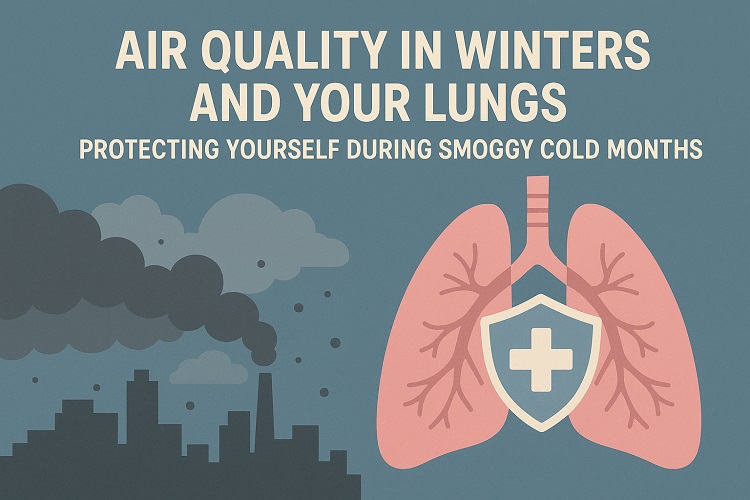
As winter arrives, many anticipate beautiful skies and mild mornings. The lovely cold air comes with a subtle threat: air quality is worsening. It gets very dirty very quickly in the winter, especially in cities and industrial places. Not only is this year’s pollution an annoying issue, it is also very bad for your health, especially your lungs. Learning how winter smog forms and how it impacts lung health is the first thing that can be done to protect yourself.
The reason why the air is worse in the winter
That’s why the air quality is worse in the winter: temperature shift. Warm air tends to pollute. In winter, cold air lingers near the surface while warm air rises. We can’t remove trash. This makes a lot of smoke and little pieces stick together.
Additionally, pollution levels are raised by emissions from cars, factories, burning field waste, and using wood or coal to heat houses. This is because the air has nitrogen dioxide, sulphur dioxide, and fine particulate matter (PM2.5 and PM10) all mixed together. A lot of places in northern India, like Delhi, Lucknow, and Gurugram, can have “severe” air quality from November to January. In the winter, this makes the cold bad for you.
Tips for Staying Safe in the Winter and Smoky Months
Weather can’t be changed, but we can protect our lungs and limit exposure. Air quality applications or neighbourhood news might help you plan outdoor activities. Low-AQI mornings and nights are the worst for outdoor activities.
Indoor air quality improves in bedrooms and living rooms using air filters. In pollution, close windows and avoid candles and incense. It can pollute indoor air. A N95 or N99 mask protects against small particles outside.
Regular exercise is good for your lungs, but smog makes indoor aerobics or yoga better. Flowers, citrus fruits, and vegetables contain antioxidants that shield cells from pollution. Keeping hydrated and cleansing your nose with saline sprays can avoid respiratory diseases.
Role of Community and Policy Action
We must all work together to clear the air. Not burning trash outside, taking the bus or train, and encouraging cleaner fuel heating and cooking can help. More trees and green belts in towns can improve air quality over time.
The government must implement stricter pollution restrictions, green transportation programs, and trash management. If taught that smog and pollution control are unhealthy, people might ask for and modify poor habits.
Taking care of your lungs after winter
People who breathe polluted air feel it long after winter. Taking care of your lungs year-round is vital since continuous exposure to toxins can have long-term effects. Long-term hazards can be reduced by frequent medical treatment, lung function testing, and flu or pneumonia vaccines.
Deep diaphragmatic breathing and yoga strengthen your lungs. A nutritious diet, regular exercise, and pollution awareness can keep your lungs healthy year-round.
Safeguarding against winter smoke is a politeness and a health benefit. You can breathe easier even in the most dirty months of the year if you pay attention and do something.
Conclusion
Protecting your lungs is both your duty and the community’s main worry as long as winter smog makes it hard for people to stay healthy in cities. It inspires winter parties but also air checks. Checking the AQI regularly, using air purifiers, eating antioxidant-rich foods, and staying indoors during peak pollution are simple strategies to help. Our policies and behaviours should be greener. Clean air is essential. Your actions today will make tomorrow’s breath safer, better, and more alive.
