- Call: +919990304304
- Email: info@drvikasmittal.com


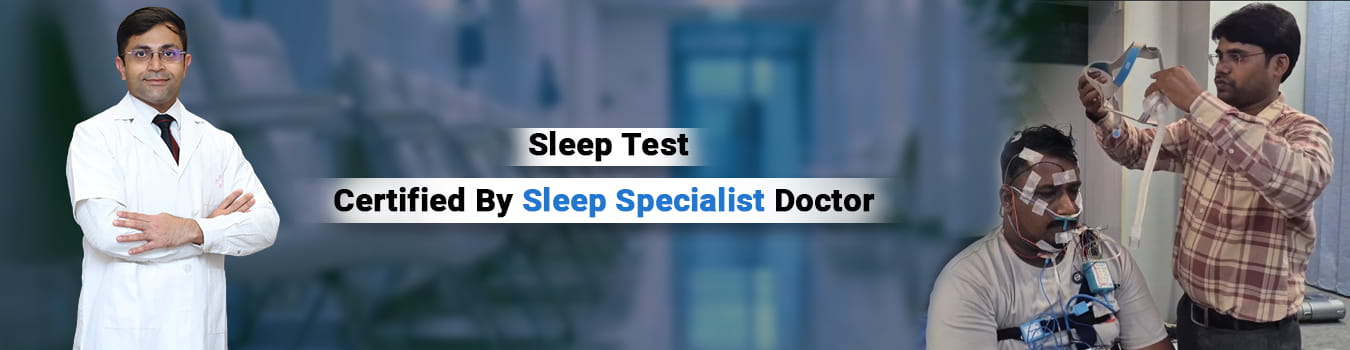

The Level 1 Sleep Study is the most comprehensive sleep test which is used to diagnose the sleep disorders, especially sleep-related breathing disorders like Obstructive Sleep Apnea (OSA), Central Sleep Apnea (CSA), and parasomnias. It is performed overnight in a sleep lab under the supervision of trained technicians.
Polysomnography helps to monitor multiple body functions simultaneously during the sleep:
The people who are suspected by these diseases:
How the Results are interpreted?
A sleep specialist reviews the data including:
No, the test is non-invasive and painless. Though the wires may feel unfamiliar, but most of the people can fall asleep eventually. The lab is kept quiet and dark for the patient’s comfort.
Even a few hours of recorded sleep can provide sufficient diagnostic data. If no results are obtained, the study may be repeated or rescheduled with mild sleep aids under the supervision.
Home sleep tests (Level 3) record fewer signals and are not suitable for all patients. Level 1 studies are gold standard tests with full brain, heart, breathing, and movement analysis under supervision.
The results are available within 7–10 days, after review by a sleep medicine specialist. The results guide further treatment like CPAP, BiPAP, or medical/surgical interventions.
It can diagnose Sleep Apnoea-Central sleep apnoea or obstructive sleep apnea, obesity hypoventilation syndrome, REM behavioural sleep disorder and Narcolepsy and some cases of Insomnia.
It measures electrical activity of your eyes, brain and chin muscle tone which helps us diagnose which stage of sleep you are sleeping. There 4 stages of sleep, stage 1, stage 2, stage 3 and REM sleep.
It measures the flow of air through the nose and mouth and breathing effort by chest and abdomen movement which helps us diagnose sleep apnoea by giving us index of no of times per hour we stop breathing (apnoea) or have depressed breathing (hypoapnoea) which is represented by an INDEX called Apnoea/Hypoapnea Index (AHI). AHI (stoppage of breathing per hour) of 5 is normal, 5-15 is mild sleep apnoea and 15-30 is moderate sleep apnoea and> 30 is severe sleep apnea.
It measures snore intensity with snore microphone
It measures heart rate through ECG and BP also.
It measures leg movements.
It measures oxygen levels- spo2 levels.
Sleep disorders cause more than just sleepiness. Poor quality sleep can have a negative impact on your energy, emotional balance, productivity, and health. Sleeping well is essential to your physical health and emotional well-being. Unfortunately, even minimal sleep loss can take a toll on your mood, energy, efficiency, and ability to handle stress. Ignoring sleep problems and disorders can lead to poor health, accidents, impaired job performance, and relationship stress. If you want to feel your best, stay healthy, and perform up to your potential, sleep is a necessity, not a luxury.

Understand-which-sleep-study-level-fits-your-symptoms-best-we-help-you-decide-Level-1-2-3

