- Call: +919990304304
- Email: info@drvikasmittal.com


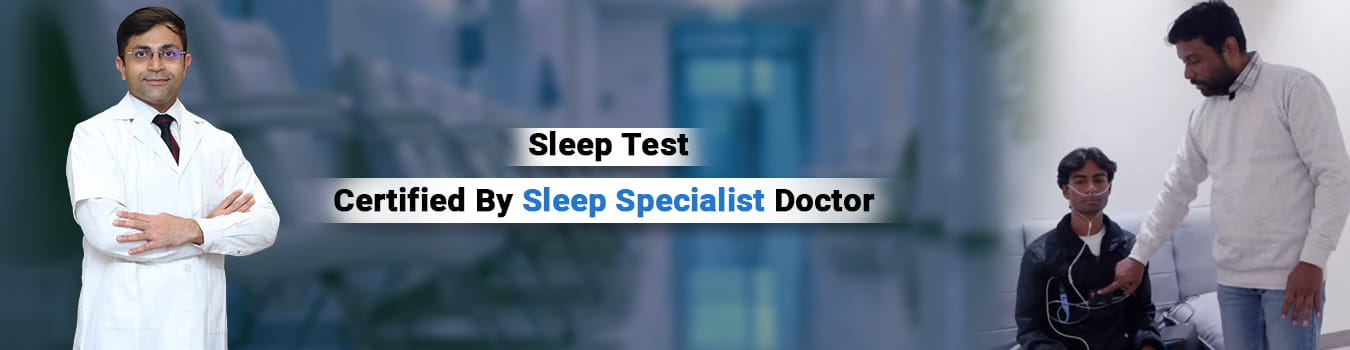
Level 2 sleep study is a full polysomnography (similar like Level 1) but conducted at home without a technician present. It records almost all the same parameters as Level 1, including brain activity, making it a comprehensive home-based test.
Level 3 testing is a simplified sleep study done at home. It focuses on detecting all the sleep-related breathing disorders like Obstructive Sleep Apnea (OSA), but does not monitor brain waves, so sleep stages can’t be assessed.
The level 2 sleep study is the one that gives the finer information on sleep which resembles the one given in the laboratory polysomnography. Sleep apnoea test compares the brain activities, eye movements, muscle tones and heart rate, airflow, breathing problems, oxygen saturation, body positions and snoring in order to properly diagnose sleeping disorders, especially obstructive sleep apnea.
The breathing and oxygenation are of greater concern in the level 3 sleep apnea test. It quantifies the airflow, respiratory effort, oxygen saturation and heart rate. Certain gadgets are also able to monitor body position and snoring. It is less complex and simpler compared to monitoring the brain waves and sleep stages.
Level 2 testing is applicable in patients that need a complete diagnostic sleep study and are unable to visit a sleep lab. Sleep Study Test at home is applicable when access to a laboratory is restricted and when the person is not afraid of applying sensors to themselves or when they are assisted by a care provider at home.
It’s used for the patients:
The level 3 studies are aimed at adults who have high chances of moderate to severe obstructive sleep apnea and do not have significant comorbidities. Home Sleep Test is typically administered in the primary diagnosis of OSA, follow-up or even in the treatment efficacy like CPAP therapy.
It’s conducted for:
Technician can train the patient or help to set up at home. There are various sensors used to note sleep, breathing and heart activity. The machine captures the data during the sleeping hours when the patient is sleeping normally. The equipment is shipped back the following day to provide an analysis with a sleep specialist.
A technician may visit your home or you may be trained at a clinic on how to apply the sensors and operate the device.
The device records all the parameters through the night while you were sleeping normally at home.
The device is then returned to the clinic next day for data analysis. A sleep specialist interprets the report and makes treatment recommendations.
A sleep clinic gathers or obtains the device. The patient presses a couple of sensors, which are primarily airflow, breathing effort and oxygen levels. The device captures data of night sleep at home. The equipment is brought back next morning to generate reports.
The test device is provided by a sleep clinic or technician, either in person or delivered to your home.
Start the device before you sleep. It collects data overnight while you sleep in your natural environment.
The next morning, you return the equipment as directed for report generation.
Patients must not use caffeine and alcohol, wash hair without products, take off nail polish, and wear loose sleepwear. Common drugs are also kept on unless otherwise. Adhere to set up procedures, provide a conducive sleep environment, and make note of sleep hours when asked.
Avoid naps, alcohol, or caffeine prior to the test. Take shower without lotions or oils, take off nail polish and put sensors and belts in place. Make sure the tool is plugged or the batteries are functional. Naturally sleep and sleep times may be noted.
Level 2 is more comprehensive and suitable when a detailed diagnosis is needed. Level 3 is sufficient for straightforward cases of suspected OSA without other complications.
It’s accurate for detecting moderate to severe obstructive sleep apnea but may miss mild cases or other sleep disorders like central apnea or insomnia.
Yes, both tests are ordered by a sleep or pulmonology specialist after an initial consultation.
You may be advised to undergo a Level 1 in-lab polysomnography for more precise results.
Symptoms of sleep apnea include loud chronic snoring, frequent pauses in breathing during sleep, gasping, snorting, or choking during sleep, unable to stay asleep, feeling unrefreshed after waking, morning headache, dry mouth after waking, and most importantly excessive day time sleepiness or tiredness or feeling of irritability

Understand-which-sleep-study-level-fits-your-symptoms-best-we-help-you-decide-Level-1-2-3

