


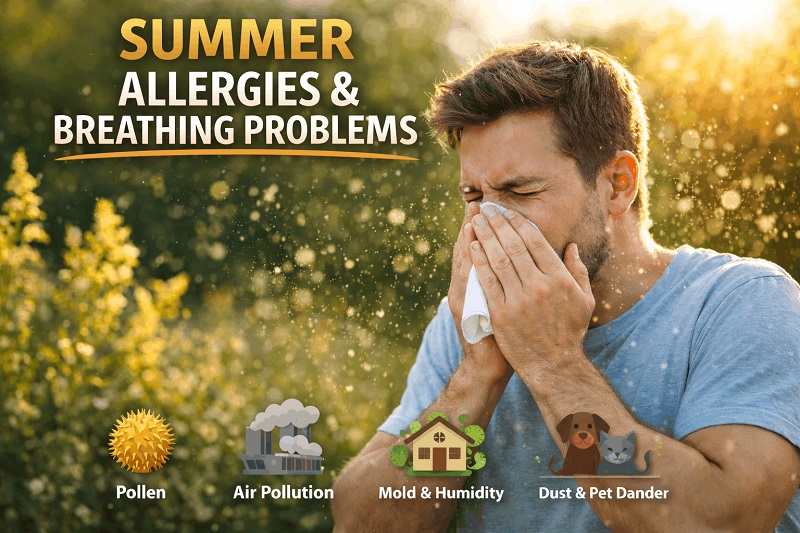
The warm wind of the summer does not only bring about the sunshine but also a lot of allergies. Although such allergies are seasonal, they are dangerous because such allergies on occasions may cause severe health complications such as sinus infection, when not managed. Therefore a person must be familiar with the allergies in summer how they occur, and what symptoms they present, as well as what prophylaxis these people can take in order to spend the colourful season without discomfort.
What Causes Summer Allergies and Respiratory Issues
Some of the factors that cause summer allergies and the respiratory problems include
Pollen
In spring and the early summer trees, the weeds and the grass spread pollen to the air. This pollen can attack sensitive persons. High levels of pollen significantly contribute to allergic rhinitis in the summer period and lead to the following symptoms sneezing, runny nose, itchy eyes as well as coughing.
Air Pollution
It is also evident that summer is a period when pollution tends to rise. Due to the hot weather, the level of ground-level ozone and smog may increase particularly in urban areas. It can aggravate the lungs and airways leading to breathing problems especially to individuals with asthma or other chronic respiratory problems.
Humidity and Mold
Sticky climate, hot weather, and humidity of summer can provide the ideal environment where the mold can develop both in the house and outside. The spores of molds are capable of causing problems in the respiratory system of individuals who have asthma, allergies or compromised immune systems. The air can be also very heavy and hard to breathe due to humidity.
Dust and Pet Dander
More dust and allergens in the air are more because of increased outdoor activity. Also, during the summer many individuals like to spend time with pets outside and this can make pets cause allergies to some people as a result of pet dander. Dust mites are also capable of aggravating respiratory diseases such as asthma because they reproduce well in warm and moist environments.
More frequent Air Conditioning.
Air conditioning might be a comfort in the summer but dirty filters can cause problems. Dirty air filters may spread dust and allergens inside, making breathing harder.
Summer Allergy Treatment
Summer allergies should not take away your happiness. The following are some of the effective methods of dealing with them:
Identify Your Triggers
Having the knowledge of what you are allergic to is half the battle. Do your allergy testing with an allergist to identify your particular triggers.
Minimise Exposure
After identifying your triggers, make some steps towards avoiding them. Look at check pollen predictions and keep inside when it has high pollen. Close windows at times of the day when the pollen is high and have a shower after being outside.
Medications
Antihistamines may prevent the liberation of a chemical that your immune system releases in case of an allergic reaction that is called histamine. Long-lasting relief can be obtained with allergy shots (immunotherapy) which progressively desensitise your immune system to allergens.
Nasal Sprays
Nasal sprays with steroids have the ability to decongest and decrease inflammation. Salty nasal sprays may be taken to relieve sore noses.
Air Purification
An air purifier has the potential of capturing allergens that are inside the house.
Conclusion
It is always advisable to consult Dr Vikas Mittal before taking any new drugs or supplements (especially when you have underlying conditions). In case of any serious allergic reactions such as wheezing, difficulty breathing or swelling of face, lips or tongue, then seek medical attention immediately.
