


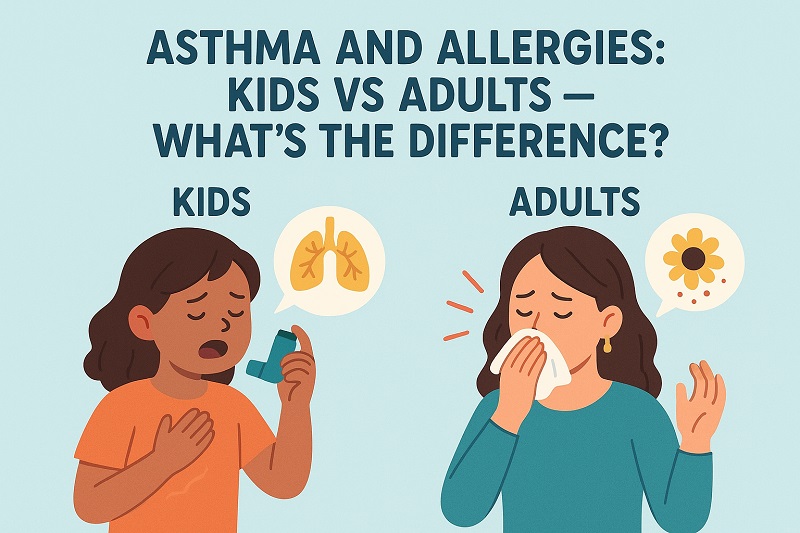
Asthma and allergies are among the most common chronic conditions affecting both children and adults. They impact breathing, energy levels and overall quality of life. While the causes may vary, both conditions share a strong connection to inflammation of the airways or immune reactions. People often notice asthma symptoms such as coughing, wheezing, chest tightness or shortness of breath, especially when exposed to triggers like dust, weather changes or infections. Similarly, allergies cause sneezing, itching, watery eyes or skin irritation, demanding timely allergy treatment to prevent flare-ups from becoming severe.
Understanding Asthma and Allergies: A Foundation
Before comparing age groups, it’s important to understand how these conditions work. Asthma is a long-term respiratory condition where the airways become inflamed and narrow. Allergies occur when the immune system reacts to harmless substances such as pollen, food, or dust mites. Because these reactions often overlap, people with allergies frequently notice stronger asthma symptoms, making both conditions interconnected.
Effective allergy treatment helps reduce airway sensitivity, allowing people to breathe more comfortably. However, how asthma and allergies appear, and how strongly they affect daily life, depends significantly on age.
Kids vs Adults: Why These Conditions Behave Differently
Asthma and allergies do not impact all age groups the same way. Children have developing immune systems and narrower airways, making them more reactive. Adults, on the other hand, accumulate exposure over time, and lifestyle factors or occupational irritants often play a major role.
Because of these biological and environmental differences, asthma symptoms and allergic reactions appear differently in kids and adults. For example, children may develop sudden flare-ups with minor infections, while adults may experience slow, persistent breathing difficulties that require targeted allergy treatment and long-term monitoring.
Asthma and Allergies in Children
1. Early and Allergy-Driven Onset
Most children who develop asthma also suffer from allergies. Their immune systems tend to overreact to triggers such as dust mites, pollen, mold, pet dander or even cold air. As a result, asthma symptoms like nighttime coughing, noisy breathing or chest tightness show up early and frequently.
Because the root cause is often allergic, doctors focus on customised allergy treatment plans for children, including inhalers, allergen avoidance and regular monitoring.
2. Highly Reactive Airways
Young children have smaller airways, making them more sensitive. Even a mild cold can trigger strong asthma symptoms, leading parents to believe their child “catches infections easily.” These symptoms may flare up quickly but also respond well to early therapy.
Effective allergy treatment and asthma control in early years often prevents the condition from worsening later in life.
Asthma and Allergies in Adults
1. Often Non-Allergic or Exposure-Related
Unlike children, adults may develop asthma without a history of childhood symptoms. Long-term exposure to pollution, workplace chemicals, smoke, or hormonal changes can trigger the condition. In these cases, asthma symptoms may appear gradually, becoming noticeable during activities such as climbing stairs or exercising.
Because triggers are often environmental rather than allergic, allergy treatment alone may not solve adult-onset asthma, and lifestyle modifications become essential.
2. More Persistent and Harder to Reverse
While children’s airways are flexible and prone to improvement, adults may experience structural airway changes over time. This makes asthma symptoms more persistent, requiring regular inhalers, prevention strategies and follow-up care.
If allergies are present, targeted allergy treatment is combined with inhaled therapy to maintain long-term respiratory stability.
Kids vs Adults: Key Differences at a Glance
Triggers
- Kids: Allergens, viral infections, weather
- Adults: Pollution, smoke, occupational irritants
Severity
- Kids: Sudden flare-ups
- Adults: Persistent, slow-building symptoms
Treatment Focus
- Kids: Early allergy treatment and inhaler support
- Adults: Exposure control + consistent asthma therapy
Managing Asthma and Allergies Effectively at Any Age
Regardless of age, early recognition of asthma symptoms and timely medical care make a big difference. Managing triggers, maintaining a clean environment and staying consistent with inhalers all play a major role. For those with allergies, personalised allergy treatment including sprays, antihistamines or immunotherapy helps prevent flare-ups and reduces airway inflammation.
Conclusion
Asthma and allergies may appear in both children and adults, but the causes, severity and long-term outcomes differ significantly between the two groups. Understanding these differences helps in detecting issues early, choosing the right treatment approach and ensuring healthier lungs at every stage of life. With proper care, targeted asthma symptoms management and the right allergy treatment, both children and adults can lead active, comfortable and fulfilling lives.