


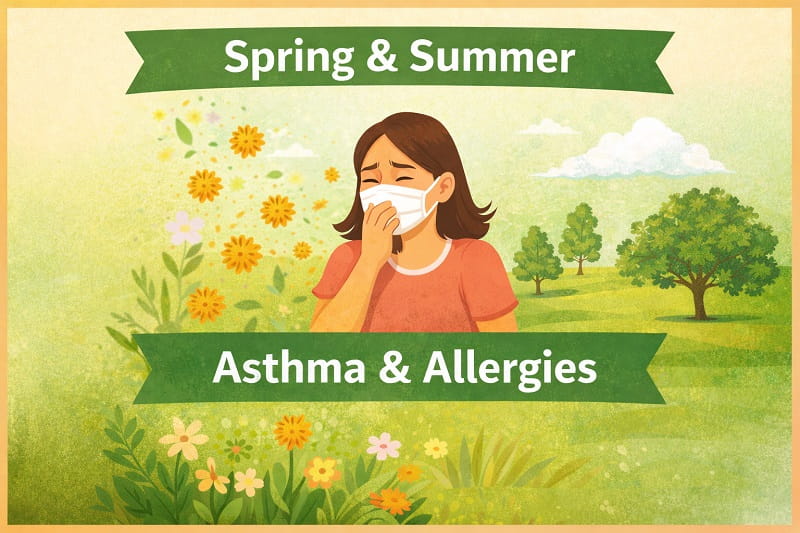
Have you ever experienced that our environment, the seasonal change in particular affects our health? Air humidity and weather change according to season and some human bodies cannot adapt to them on time. Such humans are thus more susceptible to medical disorders especially respiratory disorders. The reason is that the change of seasons is a good environment where bacteria and viruses, which cause respiratory illnesses, become active.
However the awareness of the effects of seasonal changes on your breathing system can enable you to control your symptoms and maintain your respiratory health. Read on to learn more.
Various Respiratory Conditions in Changing Seasons
The following are the various respiratory conditions that individuals experience during changing seasons:
Asthma
Pollen which is one of the known triggers of asthma, comes with spring. Symptoms may be worsened by sudden weather changes, which require careful attention and medication change in case of necessity.
Chronic Bronchitis
Winters with their cold and damp weather are the best places where respiratory infections thrive, causing exacerbations. Your protective shields are in time vaccination and warmth inside.
Allergic Rhinitis
Allergic rhinitis is caused by pollen, dust mites or mould spores being carried along by seasonal winds. Allergy to your house is relieved by nasal irrigations and allergen-proofing.
COPD
The patients of COPD usually do not cope with the humid weather. Sufficient hydration and air conditioning inside the building become new allies during sultry days.
What Pulmonologists Advise During Seasonal Changes
The following are some of the best-tips that must be observed:
Keep the Indoor Air Clean on the Daily basis.
Sensitive air ways are irritated by dust, smoke and trapped pollutants. Irritants are reduced in the home and work environments through regular dusting, exhaust fans, and adequate ventilation. The emphasis on indoor purity is raised by pulmonologists due to the fact that a significant number of exacerbations start in the rooms that are poorly ventilated.
Check the Air Quality and Head Out.
The variation of AQI in seasonal changes is rapid. Monitoring of the AQI will guide you on whether you should be outside of your house or not. During smog, the windows ought to remain closed on a day when the pollutants are at their highest and outdoor activity kept at a minimum.
Wet Down To Have an Easier time breathing.
Sufficient fluid consumption helps the mucus to remain thin and more easily cleared. Improved movement of mucus lessens irritation and facilitates comfortable expiration of air during weather variations.
Avoid Sudden Temperature Swings
Airways are very sensitive to the change of temperature of the air a person is in and when they leave a warm air to cold or a hot outside climate to air-conditioned environment. Wearing a scarf to cover nose during winter and not taking sharp changes in temperatures during summer decreases tightening of airways.
Manage Allergens in the Home
The changes of seasons lead to the increase of dust mites and mould. Exposure to allergens is minimized by washing bedding with hot water, washing carpets once a week, and using air purifiers.
Conclusion
Problems with breathing in seasonal changes are also frustrating as they continuously happen. Dr Vikas Mittal is a specialist in respiratory care, advanced testing and an individualised treatment. In case of chronic coughs, chest tightness, breathlessness, talk to the group of most skilled pulmonologists in our centre to get proper counselling and long-time support!
