


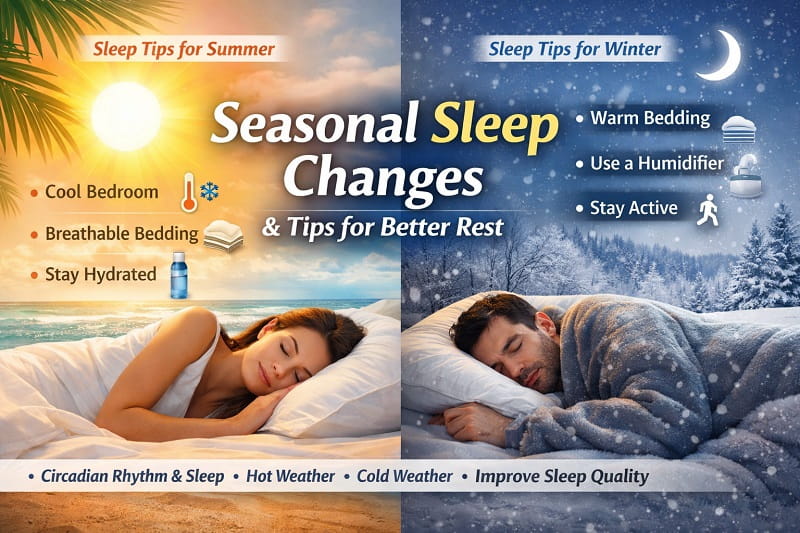
Nature is just the same as our bodies. Like all animals and plants, we possess a circadian rhythm. This 24 hour cycle can assist bodies and minds to utilize our surroundings to our benefit. The circadian rhythm reminds us when time to sleep comes since at the time it is dark, our core body temperature goes down, and our bodies begin to produce more melatonin. Similarly, our circadian system informs us that it is time to get up with the rising of the morning sun.
The seasonal variation of the natural light influences our sleep patterns radically. We will take a closer look at the reasons behind this phenomenon in the current blog and discuss the ways of preventing the disturbance of our sleep throughout the year.
The Winter
Winter is the period of short term in the Northern Hemisphere despite the fact that it usually appears the longest season of the year. The winter solstice is the shortest day of the year, and the sun is the least active at the start of this day. Following winter solstice, the days start to extend and the amount of daylight is augmented.
The Days of Summer
It is either one of the favourite seasons among some of us and most detested by others. The summer solstice is the longest day of the year on the 1st June (the first day of summer). The duration of daylight begins to reduce until the winter solstice. During the summer, there are plenty of outdoor activities which are damaging our sleep as the heat is too high and the sun is shining.
How to Sleep Better in Hot Weather
Optimize Bedroom Temp
Aim for 65deg-75degF (18deg-24degC).
Use Breathable Bedding
Use cotton or linen bedding and look into cooling mattresses or pillows ionized with gel.
Cool Down Before Bed
Shower (keep warm- not freezing) to cool core body without shocking the system.
Block Sunlight
Curtains and blinds should be closed during the day to prevent heat gathering.
Strategic Hydration
During the day, it is necessary to drink water, but it is very likely that when one goes to sleep, drinking too much water will lead to them waking up.
How to Sleep Better in Cold Weather
Adjust Bedding
Layers and a weighted blanket would help to improve the sleep quality and reduce anxiety.
Manage Air Quality
To eliminate the irritation of sinuses due to dry air that is produced by heaters use a humidifier.
Maintain Routine
Maintain a regular sleeping routine in spite of the urge to sleep.
Stay Active
Daytime exercise will also help meet the target of raising the body temperature, which can then easily fall asleep at night.
Conclusion
Seasonal variations are normal in life and do not necessarily determine your energy, mood, and productivity. Knowing the mechanisms, the circadian rhythms, and light exposure; the temperature and lifestyle interactions will enable you to apply measures that will result in a significant enhancement of sleep and daytime functioning. Dr Vikas Mittal offer evidence-based tests, diagnostic studies and personalized treatment schedules.
