


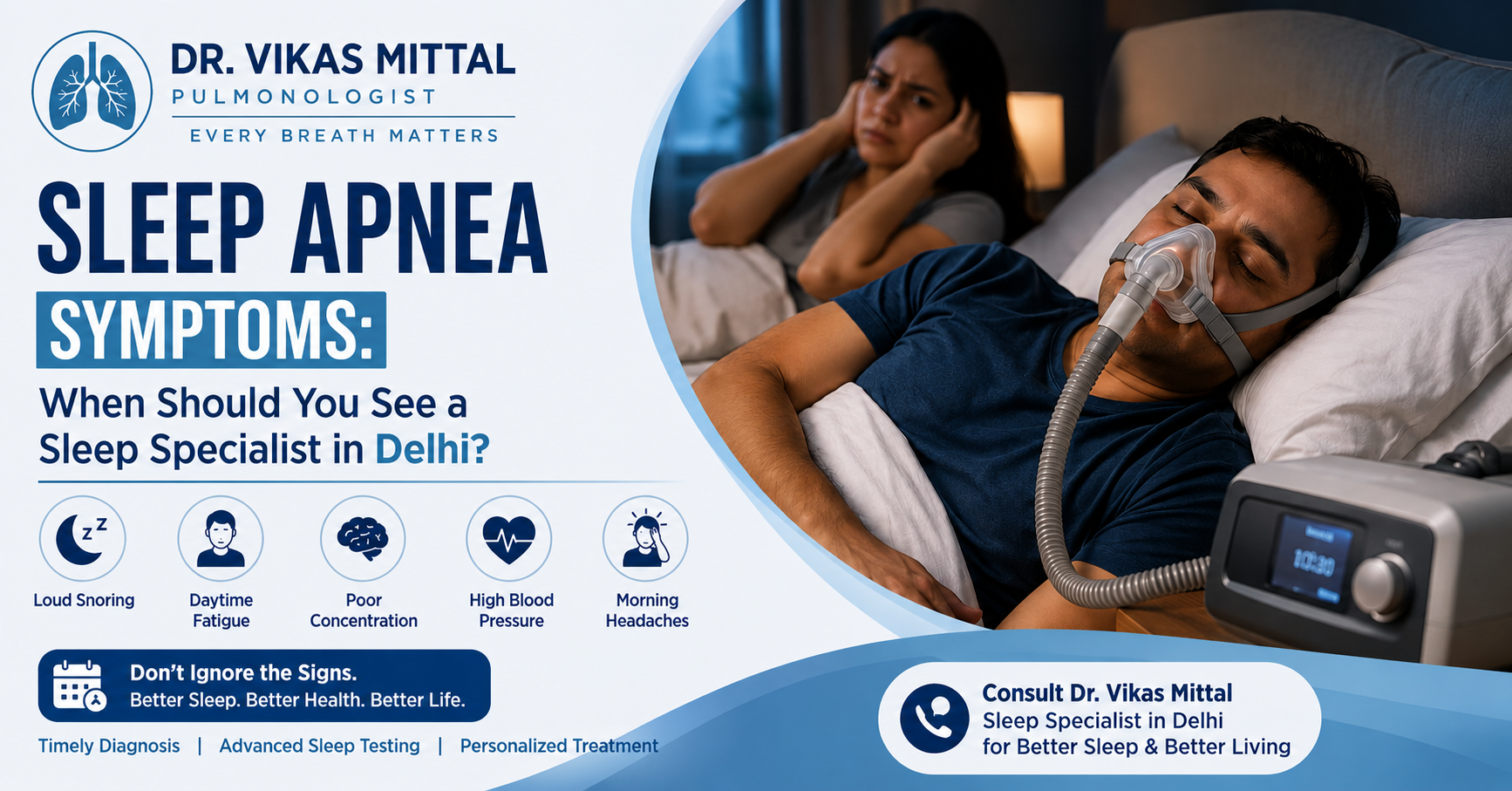
Sleep apnea symptoms can affect your sleep and health. Learn when to see a sleep specialist in Delhi and understand the signs that need expert care. Sleep apnea is a common sleep disorder in which breathing repeatedly stops and starts during sleep. Although occasional snoring may seem harmless, loud or persistent snoring accompanied by breathing pauses, gasping, daytime sleepiness, or morning headaches may indicate obstructive sleep apnea (OSA).
If you regularly experience these symptoms, consulting a sleep specialist in Delhi or an experienced pulmonologist in Delhi can help identify the underlying problem and guide appropriate treatment.
What Is Sleep Apnea?
Sleep apnea occurs when normal breathing is repeatedly interrupted while you are asleep. The most common form is obstructive sleep apnea, which happens when the upper airway becomes partially or completely blocked during sleep.
These interruptions can reduce oxygen levels and disturb normal sleep cycles. Over time, untreated sleep apnea may affect daytime alertness, concentration, mood, and overall health.
Common Sleep Apnea Symptoms
Recognising Sleep Apnea Symptoms early can help you seek appropriate medical attention. Common warning signs include:
- Loud and frequent snoring
- Pauses in breathing noticed by a partner or family member
- Waking up gasping or choking
- Excessive daytime sleepiness
- Morning headaches
- Dry mouth or sore throat after waking
- Difficulty concentrating
- Irritability or mood changes
- Restless sleep
- Frequent nighttime awakenings
- Reduced energy during the day
- Difficulty staying awake while working or travelling
If these symptoms occur regularly, it may be time to consult a sleep apnea doctor in Delhi.
When Should You See a Sleep Specialist?
You should consider visiting a sleep specialist near me if your snoring is persistent, you frequently feel tired despite getting enough sleep, or someone notices that you stop breathing during sleep.
Medical evaluation is particularly important if you experience:
1. Loud, Persistent Snoring
Not everyone who snores has sleep apnea, but loud, frequent snoring can be an important warning sign, particularly when combined with daytime fatigue or observed breathing pauses.
A specialist can assess whether your symptoms require Snoring Treatment or further investigation.
2. Breathing Pauses During Sleep
If your partner notices repeated pauses in your breathing followed by choking, gasping, or loud snoring, you should discuss these symptoms with a doctor.
These episodes are among the more significant signs associated with obstructive sleep apnea.
3. Excessive Daytime Sleepiness
Feeling unusually sleepy during the day despite spending adequate time in bed can indicate poor-quality sleep. Sleep apnea can repeatedly interrupt your sleep without you fully waking up.
A sleep disorder specialist can help determine whether sleep apnea or another sleep disorder may be responsible.
4. Morning Headaches and Dry Mouth
Some people with sleep apnea wake up with headaches, dry mouth, or a sore throat. These symptoms can have several causes, so proper evaluation is important rather than assuming that sleep apnea is the cause.
5. Unexplained Breathing Problems
If you experience unexplained shortness of breath , nighttime breathing difficulty, or persistent fatigue, a breathing problem doctor or pulmonologist can assess whether a respiratory condition is contributing to your symptoms.
How Is Sleep Apnea Diagnosed?
If your doctor suspects sleep apnea, they may recommend a sleep apnea test or sleep study.
Depending on your symptoms and medical history, testing may include:
- Home sleep study: A portable device records selected breathing and sleep-related measurements while you sleep at home.
- Polysomnography: A comprehensive sleep study performed under appropriate medical supervision.
- Oxygen monitoring and other respiratory measurements when clinically required.
A sleep study in Delhi generally begins with accurate diagnosis. Treatment should be selected according to the severity and type of sleep disorder rather than simply treating snoring.
What Is the Treatment for Sleep Apnea?
Sleep Apnea Treatment in Delhi depends on the underlying cause and severity.
Treatment options may include:
CPAP Therapy
A CPAP machine delivers continuous positive airway pressure to help keep the airway open during sleep. For people who require it, CPAP can be an effective treatment for obstructive sleep apnea.
Lifestyle Changes
Depending on individual circumstances, a doctor may recommend weight management, regular physical activity, avoiding alcohol close to bedtime, maintaining a consistent sleep schedule, or changing sleeping positions.
Oral Appliances
Certain patients may benefit from specially designed oral appliances that help maintain an open airway during sleep.
Sleep Apnea Surgery
In selected cases, surgery may be considered when anatomical factors contribute significantly to airway obstruction. The appropriate approach depends on an individual’s examination and diagnosis.
Sleep Apnea Treatment Without CPAP
Some patients may have alternatives to CPAP depending on the type and severity of their condition. A specialist can explain whether options such as oral appliances, positional therapy, lifestyle measures, or other interventions are appropriate.
Sleep Apnea and Other Respiratory Conditions
Breathing-related symptoms should not automatically be attributed to sleep apnea. Conditions such as asthma, COPD, chronic bronchitis, lung infections, pulmonary fibrosis, or interstitial lung disease can also cause breathing difficulties.
For example, people searching for an Asthma Doctor Near Me , COPD Specialist in Delhi, ILD Specialist, or Pulmonary Fibrosis specialist may require a comprehensive respiratory evaluation rather than a sleep-focused assessment alone.
If you have a persistent cough, dry cough, chronic cough, recurrent chest infections, or breathlessness, a pulmonologist can help investigate possible lung-related causes.
Why Consult a Pulmonologist for Sleep-Related Breathing Problems?
A pulmonologist specialises in diseases and conditions affecting the lungs and respiratory system. Sleep-related breathing disorders can overlap with respiratory problems, making a pulmonary evaluation useful for patients with symptoms involving both sleep and breathing.
If you are searching for a Best Pulmonologist in Delhi , Pulmonologist Near Me, pulmonary specialist in Delhi, chest specialist in Delhi, or lung specialist doctor in Delhi NCR, look for a qualified specialist who can evaluate your symptoms and recommend appropriate testing.
A pulmonologist may also evaluate associated concerns such as asthma, COPD, chronic cough, recurrent lung infections, pulmonary fibrosis, ILD, or unexplained shortness of breath.
Sleep Apnea Treatment in Paschim Vihar and West Delhi
For patients looking for a Pulmonologist in Paschim Vihar, Sleep Apnea Treatment in Delhi, sleep specialist near me, or sleep apnea doctor in Delhi, consultation is conveniently available in the Paschim Vihar area.
Clinic Location
Dr. Vikas Mittal – Pulmonologist
📍 2nd Floor, B-3, opposite Pashchim Vihar, Block D, New Multan Nagar, Shakur Basti, Delhi, New Delhi, Delhi 110056
Patients from Paschim Vihar, New Multan Nagar, Shakur Basti, and nearby areas of West Delhi can visit the clinic for evaluation of sleep-related breathing problems and other respiratory concerns.
When Is a Sleep Study Recommended?
A sleep study may be recommended when your symptoms suggest sleep apnea or another sleep disorder. Your doctor may consider factors such as:
- Loud habitual snoring
- Witnessed breathing pauses
- Nighttime choking or gasping
- Excessive daytime sleepiness
- Certain medical or respiratory conditions
- Persistent symptoms despite adequate sleep
A home sleep study near me may be suitable for some people, while others may need a more comprehensive sleep assessment.
Frequently Asked Questions
What are the main Sleep Apnea Symptoms?
Common symptoms include loud snoring, witnessed breathing pauses, gasping during sleep, excessive daytime sleepiness, morning headaches, dry mouth, and difficulty concentrating.
Who treats sleep apnea?
Sleep apnea may be evaluated and treated by a sleep specialist, pulmonologist, ENT specialist, or another appropriately trained healthcare professional depending on the suspected cause.
Is a sleep apnea test possible at home?
Yes. A home sleep apnea test can be appropriate for some adults with suspected obstructive sleep apnea. Your doctor can determine whether home testing is suitable for you.
Does everyone who snores need treatment?
No. Snoring can occur without sleep apnea. However, persistent loud snoring accompanied by breathing pauses, gasping, or daytime sleepiness should be medically evaluated.
Is CPAP the only treatment for sleep apnea?
No. Treatment depends on the type and severity of sleep apnea and may include CPAP, lifestyle measures, oral appliances, positional therapy, and selected surgical approaches.
Conclusion
Sleep Apnea Symptoms such as loud snoring, breathing pauses, gasping, excessive daytime sleepiness, and morning headaches should not be ignored when they occur regularly. A proper sleep apnea test, sleep study, and medical evaluation can help determine whether obstructive sleep apnea or another condition is responsible.
If you are looking for Sleep Apnea Treatment in Delhi, sleep specialist near me, sleep clinic in Delhi, or a Best Pulmonologist in Delhi, consult a qualified respiratory or sleep specialist for personalised evaluation and treatment.
Visit Dr. Vikas Mittal in Delhi
📍 2nd Floor, B-3, opposite Pashchim Vihar, Block D, New Multan Nagar, Shakur Basti, Delhi, New Delhi, Delhi 110056
Serving patients from Paschim Vihar and nearby West Delhi areas.
