


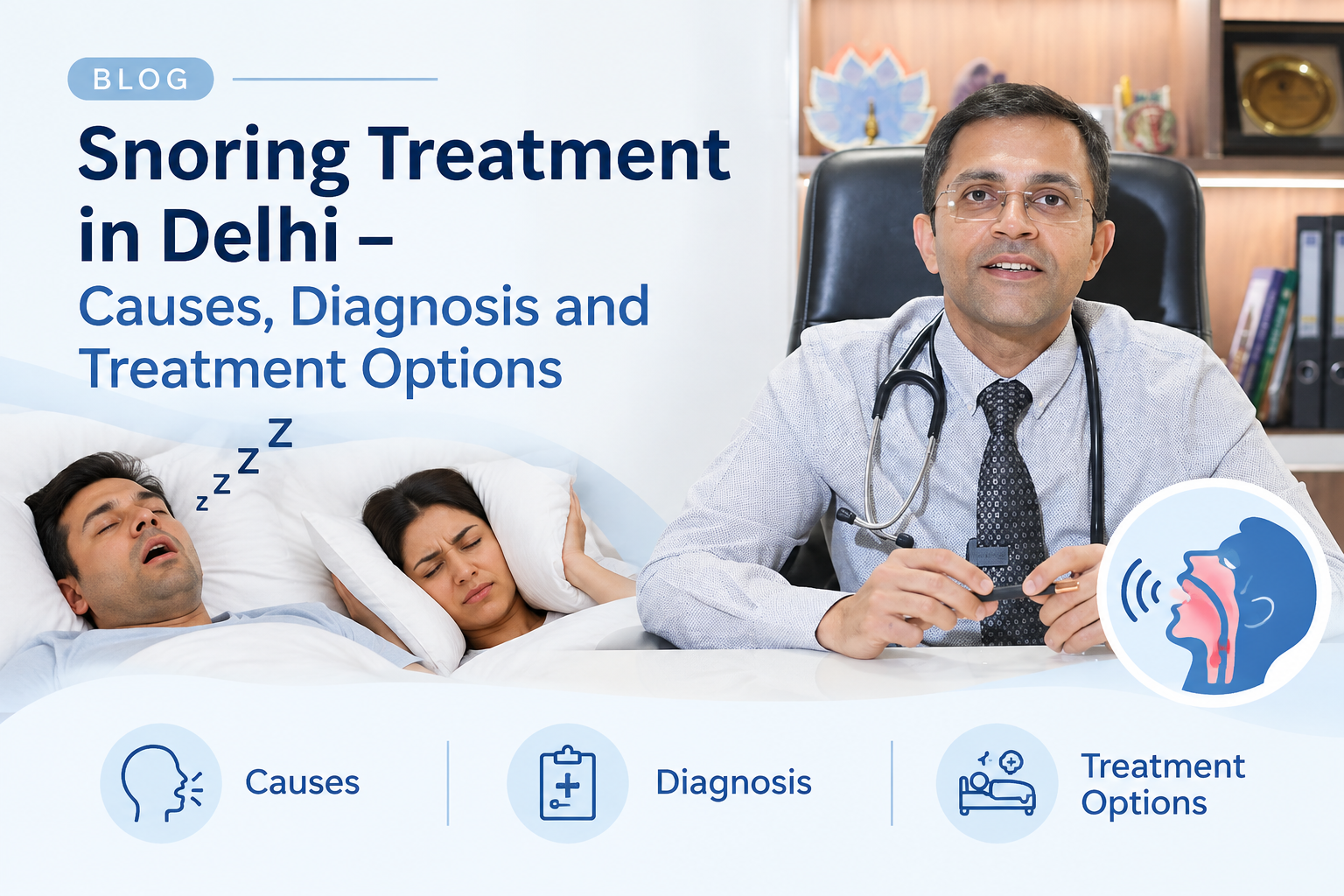
Looking for Snoring treatment in Delhi ? Learn about the causes of loud snoring, its connection with sleep apnea, sleep tests, and treatment options with Dr. Vikas Mittal. Snoring is a common problem that can affect both the quality of your sleep and the sleep of people around you. While occasional snoring may not always indicate a medical problem, loud snoring, chronic snoring, or snoring associated with breathing pauses can sometimes be a sign of an underlying sleep-related breathing disorder.
If you are looking for Snoring Treatment in Delhi , it is important to understand why you are snoring and whether it may be connected to obstructive sleep apnea.
What Is Snoring?
Snoring occurs when airflow through the nose and throat becomes partially restricted while you are sleeping. As air passes through the narrowed airway, the surrounding tissues can vibrate, producing the familiar sound of snoring.
Snoring may be associated with several factors, including:
- Nasal congestion or blockage
- Allergies
- Sleeping on your back
- Excess body weight
- Alcohol consumption before bedtime
- Relaxation of throat muscles during sleep
- Structural features of the nose or throat
- Obstructive sleep apnea
Not everyone who snores has sleep apnea. However, persistent or unusually loud snoring deserves attention, especially when other symptoms are present.
When Can Snoring Be a Sign of Sleep Apnea?
One of the important connections to understand is snoring and sleep apnea.
Obstructive sleep apnea occurs when the upper airway becomes partially or completely blocked during sleep. This can cause repeated interruptions in breathing throughout the night.
If your loud snoring is accompanied by any of the following symptoms, consider consulting a Sleep Apnea Doctor in Delhi:
- Breathing stops during sleep
- Gasping or choking at night
- Loud and frequent snoring
- Excessive daytime sleepiness
- Morning headaches
- Dry mouth after waking
- Difficulty concentrating
- Restless or disturbed sleep
- Feeling tired despite adequate sleep
A person may not always realize that their breathing is stopping during sleep. A partner or family member may notice these episodes first.
Is Loud Snoring Always Sleep Apnea?
No. Loud snoring does not automatically mean that you have sleep apnea.
Snoring can result from nasal congestion, allergies, sleeping position, airway anatomy, or other factors. However, when loud snoring occurs together with breathing pauses, gasping, choking, or excessive daytime sleepiness, it may require further evaluation.
This is why a Snoring Doctor in Delhi can help determine whether your snoring is simply habitual or associated with an underlying sleep-related breathing disorder.
When Should You See a Snoring Specialist?
You should consider a Snoring Specialist in Delhi if:
- Your snoring happens regularly.
- Your snoring is unusually loud.
- Your partner notices pauses in your breathing.
- You wake up choking or gasping.
- You feel excessively sleepy during the day.
- You frequently wake up with a dry mouth or headache.
- Your sleep does not feel refreshing.
- Snoring is affecting your daily activities or your partner’s sleep.
A proper evaluation can help identify the cause of your symptoms and determine whether a sleep study is needed.
What Is Chronic Snoring?
Chronic snoring refers to snoring that occurs regularly over an extended period rather than only during occasional illness or nasal congestion.
Persistent snoring may be related to ongoing nasal obstruction, airway narrowing, lifestyle factors, or obstructive sleep apnea.
Instead of simply trying to suppress the sound, the underlying cause should be assessed. Depending on the findings, your doctor may recommend lifestyle measures, treatment for nasal problems, a sleep study, or evaluation for sleep apnea.
How Is Snoring Diagnosed?
The first step is usually a medical consultation. Your doctor may discuss your sleep pattern, snoring frequency, daytime symptoms, medical history, medications, and other relevant factors.
If obstructive sleep apnea is suspected, a Sleep Apnea Test or sleep study may be recommended.
Sleep Study
A sleep study can monitor different body functions while you sleep, including:
- Breathing patterns
- Airflow
- Oxygen saturation
- Heart rate
- Breathing interruptions
- Body movements
- Snoring
- Other sleep-related events
A Level 1 polysomnography is a comprehensive sleep study used to evaluate sleep disorders, including obstructive and central sleep apnea.
Can You Get a Home Sleep Study?
For selected patients, a Home Sleep Apnea Test may be an option.
A home sleep apnea test can monitor breathing and oxygen-related parameters while you sleep at home. It may be considered for suitable patients with suspected obstructive sleep apnea.
Different levels of home sleep testing are available. Level 2 and Level 3 tests differ in the number of parameters they monitor, so the appropriate test should be selected based on the patient’s symptoms and medical assessment.
Snoring Treatment in Delhi
There is no single treatment that works for every person who snores. Treatment depends on the underlying cause.
1. Lifestyle Changes
Depending on your individual situation, your doctor may recommend:
- Maintaining a healthy weight
- Following a regular sleep schedule
- Avoiding alcohol close to bedtime
- Improving sleeping position
- Regular physical activity
- Managing nasal congestion or allergies
These measures may help reduce snoring in some people.
2. CPAP Treatment
If snoring is associated with obstructive sleep apnea, CPAP therapy may be recommended for appropriate patients.
CPAP, or Continuous Positive Airway Pressure, uses a mask to deliver a continuous flow of air that helps keep the airway open during sleep.
CPAP can help reduce breathing interruptions and may also reduce snoring in people with obstructive sleep apnea.
3. Oral Appliances
Some patients with snoring or obstructive sleep apnea may be suitable for an oral appliance. These devices are designed to help maintain the airway during sleep.
Suitability depends on the individual’s condition and clinical assessment.
4. Treating Nasal Problems
If nasal congestion, allergies, or other nasal problems are contributing to snoring, treating the underlying problem may improve airflow and reduce symptoms.
5. Positional Therapy and Other Treatments
Some people may benefit from positional therapy or other treatment approaches. In selected cases, further specialist evaluation or surgical treatment may be considered.
The appropriate approach depends on the cause and severity of the problem.
Snoring and Sleep Apnea Should Not Be Ignored
Persistent snoring can be more than just a nighttime disturbance. When it occurs alongside breathing pauses, gasping, daytime sleepiness, or morning headaches, it may indicate obstructive sleep apnea.
A proper evaluation can help distinguish simple snoring from sleep-related breathing disorders and guide appropriate treatment.
Consult Dr. Vikas Mittal for Snoring and Sleep Apnea in Delhi
Dr. Vikas Mittal is a pulmonologist and sleep specialist with experience in pulmonary and sleep medicine. His practice includes evaluation and management of sleep-related problems such as obstructive sleep apnea and snoring.
If you are searching for Snoring Treatment in Delhi, Snoring Doctor Delhi, or a Sleep Apnea Specialist in Delhi, a medical consultation can help determine whether your symptoms require a sleep study or other evaluation.
Clinic Address
Dr. Vikas Mittal – Pulmonologist & Sleep Specialist
2nd Floor, B-3, Opposite Paschim Vihar, Block D, New Multan Nagar, Shakur Basti, Delhi – 110056
Phone: +91 9990304304
Website: https://drvikasmittal.com/
Frequently Asked Questions
Is snoring a serious problem?
Occasional snoring may not indicate a serious problem. However, persistent loud snoring, particularly when associated with breathing pauses, gasping, or daytime sleepiness, should be medically evaluated.
Can loud snoring be treated?
Yes. Treatment depends on the underlying cause. Lifestyle changes, management of nasal problems, oral appliances, CPAP therapy for appropriate patients with sleep apnea, and other approaches may be considered.
What doctor should I see for chronic snoring?
A pulmonologist or sleep specialist can evaluate chronic snoring and determine whether it may be associated with obstructive sleep apnea or another sleep-related breathing disorder.
Can snoring be a sign of sleep apnea?
Yes. Loud or persistent snoring can be a symptom of obstructive sleep apnea, especially when accompanied by breathing pauses, gasping, choking, or excessive daytime sleepiness.
Can I have a sleep apnea test at home?
Some patients may be suitable for a home sleep apnea test. A doctor should first assess your symptoms and determine whether home testing is appropriate.
When should I seek snoring treatment in Delhi?
Consider a medical consultation if your snoring is persistent or very loud, affects your sleep or your partner’s sleep, or occurs with breathing pauses, gasping, daytime sleepiness, or morning headaches.
Medical Disclaimer: This article is intended for general educational purposes and does not replace professional medical diagnosis, treatment, or advice. If you have persistent snoring or symptoms suggestive of sleep apnea, consult a qualified healthcare professional
