


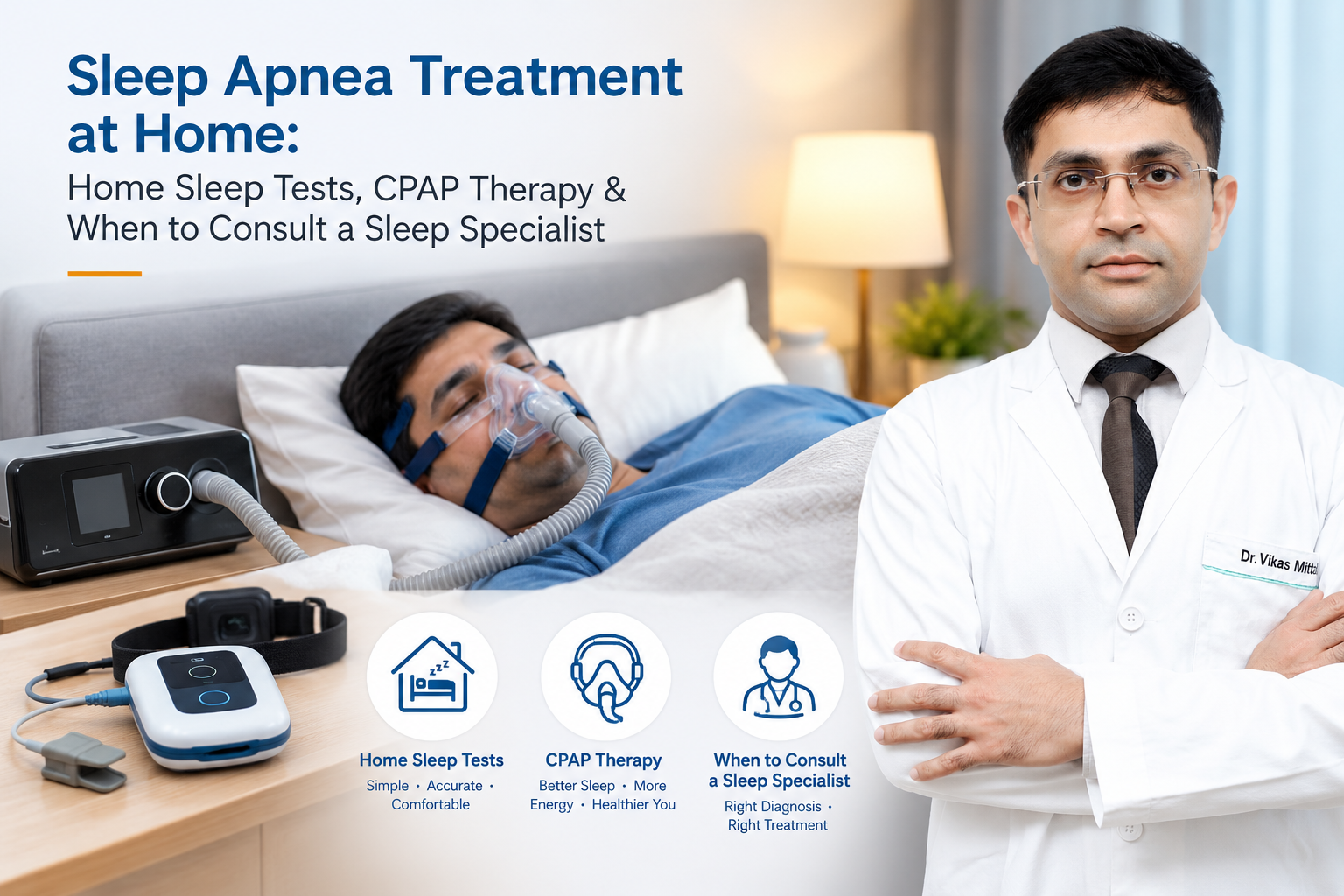
A proper evaluation can help identify the cause and determine whether you need a Sleep Apnea Treatment at Home, an overnight sleep study, CPAP therapy, or another treatment approach. Poor sleep, loud snoring, morning headaches and excessive daytime sleepiness are sometimes more than signs of a busy lifestyle. They can be symptoms of sleep apnea, a condition in which breathing repeatedly stops or becomes restricted during sleep.
If you are searching for a sleep doctor in Delhi, sleep doctor near me, sleep apnoea doctor, sleep specialist in Delhi, or sleep apnea treatment near me, this guide explains how diagnosis and treatment can work, including options that can be managed at home.
What Is Sleep Apnea?
Sleep apnea is a sleep-related breathing disorder in which breathing repeatedly stops or becomes reduced during sleep. Obstructive sleep apnea (OSA) is the most common form and occurs when the upper airway becomes blocked or narrowed during sleep.
Common symptoms include:
- Loud or persistent snoring
- Breathing pauses noticed by a sleeping partner
- Gasping or choking during sleep
- Excessive daytime sleepiness
- Morning headaches
- Dry mouth after waking
- Difficulty concentrating
- Frequent nighttime awakenings
- Feeling tired despite getting enough time in bed
Not everyone who snores has sleep apnea, so symptoms should be evaluated rather than assuming that snoring alone confirms OSA.
Can Sleep Apnea Be Tested at Home?
Yes. For some adults with symptoms suggesting uncomplicated obstructive sleep apnea, a home sleep apnea test (HSAT) may be appropriate. A healthcare professional determines whether an at-home test is suitable based on the person’s symptoms and medical history.
A home sleep test may monitor measurements such as:
- Breathing or airflow
- Respiratory effort
- Blood oxygen levels
- Heart rate
- Snoring and related breathing patterns
Unlike a full laboratory polysomnography, a home sleep apnea test generally uses fewer sensors and does not provide the same comprehensive measurement of sleep stages and brain activity.
Is a Home Sleep Apnea Test Accurate?
A properly selected and technically adequate home test can be useful for diagnosing OSA in appropriate adults. However, a negative or inconclusive home test does not always rule out sleep apnea. AASM guidance recommends polysomnography when an initial home test is negative, inconclusive or technically inadequate but clinical suspicion remains.
People with certain medical conditions may need an in-laboratory sleep study rather than relying on a home test. These include significant cardiorespiratory disease, suspected hypoventilation, certain neuromuscular conditions, chronic opioid use, previous stroke and severe insomnia.
What Is a Sleep Apnea Test?
A sleep apnea test is used to determine whether breathing abnormalities occur during sleep and, when applicable, how severe the condition is.
There are two commonly discussed approaches:
1. Home Sleep Apnea Test
A portable device is used while you sleep at home. It can be convenient for selected patients who have a high likelihood of uncomplicated OSA.
If you are searching for:
- sleep apnea test at home
- sleep apnoea test at home
- apnea test at home
- home sleep study near me
- sleep apnea test near me
the first step should be a medical assessment to determine whether home testing is appropriate.
2. Polysomnography
A laboratory sleep study, or polysomnography, is a more comprehensive examination. It can monitor brain activity, heart rate, breathing, oxygen levels, body movements and other parameters during sleep.
Your doctor can recommend the appropriate test based on your symptoms and medical history.
Sleep Apnea Treatment at Home
Treatment depends on the type and severity of sleep apnea and the individual’s health needs. Sleep apnea treatment at home may include prescribed PAP therapy, lifestyle measures and other treatments recommended after evaluation.
CPAP Therapy
CPAP (Continuous Positive Airway Pressure)is one of the most commonly used treatments for obstructive sleep apnea. The machine delivers a continuous flow of air through a mask to help keep the airway open while you sleep.
Different types of positive airway pressure devices include:
- CPAP: provides continuous pressure.
- APAP: automatically adjusts pressure according to breathing requirements.
- BPAP: provides different pressure levels during inhalation and exhalation.
The appropriate device and pressure settings should be determined by a healthcare professional rather than selected solely from online information.
Using a CPAP Machine Correctly
If CPAP is prescribed, consistent use is important. It may take some time to become comfortable with the mask and airflow.
Possible problems can include:
- Dry mouth
- Nasal congestion
- Runny nose
- Nosebleeds
- Dry or irritated eyes
- Mask discomfort
Discuss persistent side effects or difficulties with your healthcare provider.
Can Sleep Apnea Be Treated Without CPAP?
Depending on the type and severity of OSA, alternatives may sometimes be considered. These can include:
- Custom oral appliances
- Positional therapy
- Weight management when appropriate
- Lifestyle changes
- Orofacial therapy in selected cases
- Certain surgical procedures
- Other specialist-directed treatments
Oral appliances, for example, may be considered for some people who cannot tolerate CPAP or prefer an alternative, with the appropriate device fitted by a qualified dental professional.
Therefore, searches such as “sleep apnea treatment without CPAP” should not be interpreted as meaning that CPAP is unnecessary for everyone. The suitable treatment depends on the individual’s diagnosis.
Lifestyle Measures That May Support Sleep Apnea Treatment
Depending on your medical situation, your healthcare provider may recommend lifestyle measures alongside medical treatment.
These can include:
- Maintaining a healthy weight
- Regular physical activity
- Maintaining a consistent sleep schedule
- Avoiding smoking
- Limiting alcohol
- Sleeping on your side rather than your back when recommended
- Following your prescribed CPAP or other therapy consistently
These measures may support treatment but should not be considered a substitute for professional evaluation when sleep apnea is suspected.
When Should You Consult a Sleep Doctor?
Consider speaking with a sleep doctor specialist or pulmonologist if you regularly experience:
- Loud snoring
- Witnessed pauses in breathing
- Gasping or choking during sleep
- Significant daytime sleepiness
- Morning headaches
- Unexplained fatigue
- Difficulty concentrating
- Persistent poor-quality sleep
A healthcare professional can review your symptoms, medical history and risk factors and determine whether you need a sleep apnoea test, home sleep study or laboratory polysomnography.
You may also search online for a sleep specialist near me , sleep specialist Delhi, sleep clinic in Delhi, sleep centre near me, sleep apnea doctor Delhi or sleep disorder specialist . The important step is to choose an appropriate medical evaluation rather than relying only on online symptom checkers.
Sleep Apnea and Other Lung Conditions
Sleep-related breathing problems can occur alongside respiratory conditions. People being evaluated for sleep apnea may also have conditions such as COPD, asthma or other chronic respiratory disorders
If you also experience persistent cough, wheezing, breathlessness, recurrent chest infections or reduced exercise tolerance, discuss these symptoms with a pulmonologist. Depending on your symptoms, evaluation may include respiratory testing and other investigations.
This can be particularly relevant for people searching for a pulmonologist in Delhi, respiratory doctor specialist, COPD doctor near me, asthma specialist near me or chest and lung specialist.
Why Follow-Up Matters After Diagnosis
Diagnosis is only the beginning of sleep apnea management. If CPAP or another treatment is prescribed, follow-up helps determine whether the treatment is working and whether adjustments are required.
People receiving treatment may need periodic medical reviews, and in some circumstances a repeat sleep study may be considered, particularly after substantial weight changes or if symptoms return.
Untreated sleep apnea can affect daytime alertness, concentration and overall health. It has also been associated with cardiovascular and other health problems, which is why persistent symptoms should not be ignored.
Sleep Apnea Consultation in Delhi
If you are looking for a sleep doctor in Delhi, sleep apnoea doctor, sleep specialist in Delhi, sleep clinic in Delhi or pulmonologist near me, consultation with a pulmonologist can help you understand whether your symptoms may be related to sleep apnea and whether a home sleep apnea test or other sleep study is appropriate.
Dr. Vikas Mittal – Pulmonologist
The clinic information shown in the provided profile is:
Address:
2nd Floor, B-3, opposite Paschim Vihar, Block D, New Multan Nagar, Shakur Basti, Delhi, New Delhi – 110056
