


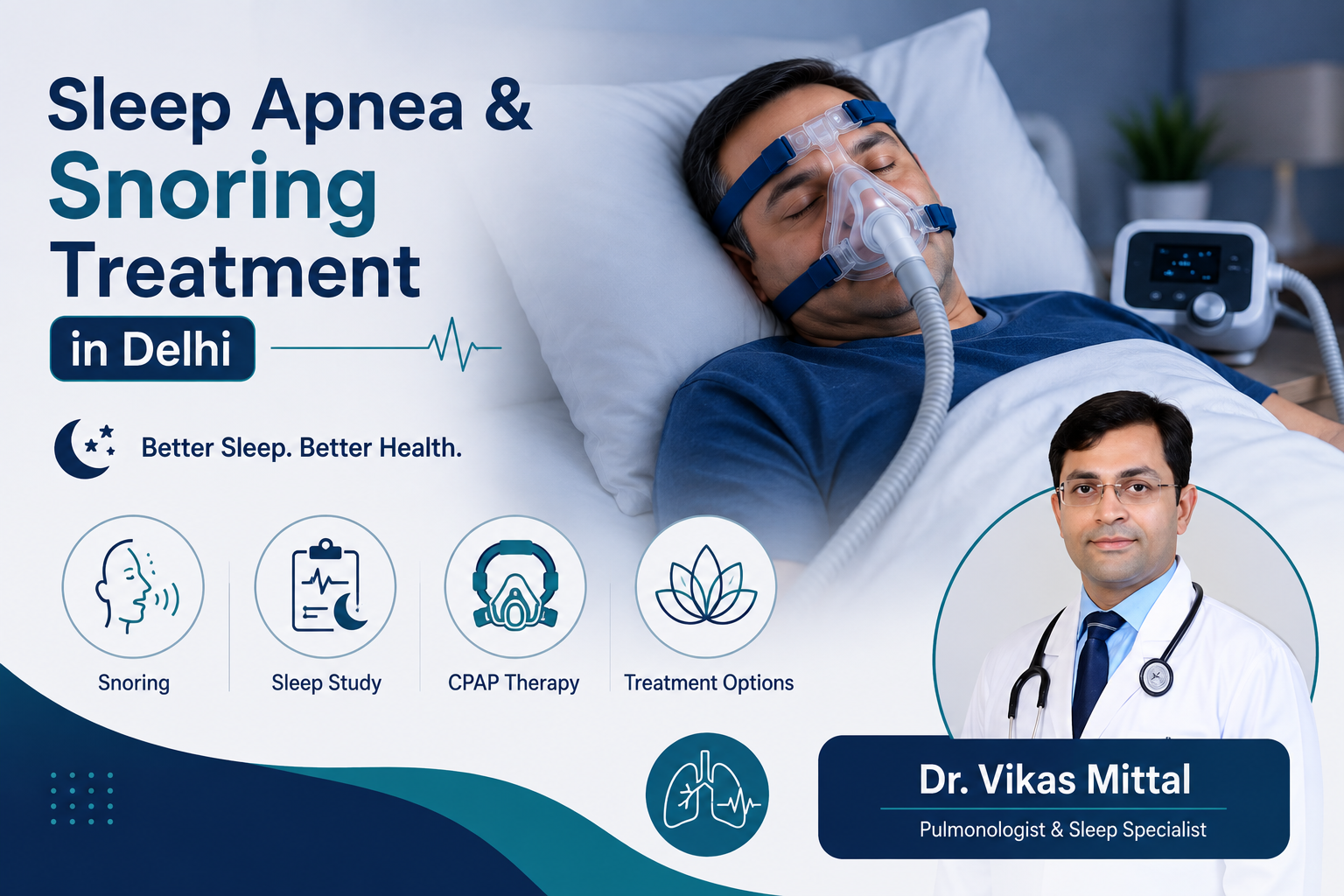
Sleep Apnea & Snoring Treatment in Delhi. Learn about symptoms, sleep studies, CPAP therapy and effective treatment options for better sleep and breathing.Poor sleep is not always caused by stress, late-night screen time, or an irregular routine. If you snore loudly, wake up gasping for air, feel excessively sleepy during the day, or frequently wake up with headaches, sleep apnea could be the underlying reason.
Sleep apnea is a sleep-related breathing disorder in which breathing repeatedly stops and starts during sleep. If left untreated, it may affect sleep quality, concentration, energy levels, and overall health.
If you are looking for Sleep Apnea Treatment in Delhi, understanding the symptoms, diagnosis, sleep study process, CPAP therapy, and other treatment options is an important first step.
What Is Sleep Apnea?
Sleep apnea is a condition in which normal breathing is interrupted repeatedly while a person is asleep. These interruptions can occur because the airway becomes blocked or because the brain temporarily fails to send the appropriate signals to the breathing muscles.
The most common type is obstructive sleep apnea (OSA), which occurs when the upper airway becomes partially or completely blocked during sleep.
Another type is central sleep apnea, where breathing interruptions occur because the brain does not properly communicate with the muscles responsible for breathing.
Because these breathing interruptions can happen many times during the night, a person may not always remember waking up. However, their sleep can become fragmented and less restorative.
Common Sleep Apnea Symptoms
Recognising Sleep Apnea Symptoms early can help with timely diagnosis and treatment.
Common symptoms include:
- Loud or frequent snoring
- Pauses in breathing during sleep
- Waking up suddenly while choking or gasping
- Excessive daytime sleepiness
- Morning headaches
- Dry mouth after waking
- Difficulty concentrating
- Irritability or mood changes
- Restless sleep
- Frequent nighttime awakenings
- Reduced energy during the day
- Difficulty staying awake while reading, working, or travelling
Not everyone who snores has sleep apnea. However, loud habitual snoring combined with breathing pauses, choking episodes, or excessive daytime sleepiness should be medically evaluated.
Is Snoring Always a Sign of Sleep Apnea?
No. Snoring can occur for several reasons, including nasal congestion, allergies, sleeping position, alcohol consumption, weight-related airway narrowing, or anatomical factors.
However, Snoring Treatment should not only focus on reducing the sound of snoring. If snoring is accompanied by breathing pauses or daytime fatigue, it is important to determine whether sleep apnea is responsible.
A pulmonologist can evaluate your symptoms and recommend appropriate testing when required.
When Should You See a Pulmonologist?
You should consider consulting a Best Pulmonologist in Delhi if you experience persistent snoring along with:
- Breathing pauses during sleep
- Nighttime choking or gasping
- Excessive daytime sleepiness
- Unexplained morning headaches
- Persistent fatigue
- Difficulty concentrating
- Repeated nighttime awakenings
- High blood pressure or other health concerns associated with poor sleep
A Pulmonologist Near Me can assess your breathing symptoms, medical history, sleep pattern, and risk factors before recommending further evaluation.
If your symptoms are accompanied by chest discomfort or unexplained respiratory symptoms, a chest pain doctor in Delhi or Chest Specialist Near Memay also be appropriate depending on the clinical situation.
What Is a Sleep Study?
A sleep study is one of the most important investigations used to diagnose sleep apnea.
Depending on your symptoms and medical history, your doctor may recommend an overnight sleep assessment. This can monitor several parameters while you sleep, such as:
- Breathing patterns
- Oxygen levels
- Heart rate
- Airflow
- Breathing interruptions
- Body movements
- Sleep-related events
A sleep study can help determine whether sleep apnea is present and provide information about its severity.
If you are searching for Sleep Study Treatment in Delhi, it is important to understand that a sleep study itself is a diagnostic evaluation rather than a treatment. The results help your doctor decide which treatment approach is appropriate.
What Happens During a Sleep Study?
During a sleep study, sensors are used to monitor different body functions while you sleep. Depending on the type of test, the assessment may be performed in a sleep centre or, in selected cases, at home using a portable monitoring device.
The results can help your doctor understand:
- How frequently breathing interruptions occur
- Whether oxygen levels fall during sleep
- Whether the pattern is consistent with obstructive sleep apnea
- How severe the condition may be
- Whether further evaluation is required
Your doctor will interpret the findings along with your symptoms rather than relying on a single measurement.
CPAP Machine Treatment for Sleep Apnea
For many people with obstructive sleep apnea, CPAP Machine Treatment is an effective treatment option.
CPAP stands for Continuous Positive Airway Pressure. A CPAP machine delivers a continuous flow of air through a mask while you sleep. This pressure helps keep the airway open and reduces breathing interruptions.
CPAP therapy may help improve:
- Nighttime breathing
- Snoring
- Sleep quality
- Daytime alertness
- Morning fatigue
- Sleep-related breathing interruptions
However, CPAP settings and mask selection should be determined with appropriate medical guidance. Simply purchasing a CPAP machine without proper evaluation may not provide the right treatment.
Other Sleep Apnea Treatment Options
Treatment depends on the type and severity of sleep apnea and the individual’s overall health.
Depending on the diagnosis, treatment may include:
1. Lifestyle Changes
Your doctor may recommend changes such as:
- Maintaining a healthy weight
- Regular physical activity
- Avoiding alcohol close to bedtime
- Maintaining a consistent sleep schedule
- Avoiding smoking
- Improving sleeping position
2. CPAP or Positive Airway Pressure Therapy
CPAP and other positive airway pressure therapies may be recommended when appropriate.
3. Oral Appliances
Certain patients may benefit from specially designed oral appliances that help maintain airway opening during sleep.
4. Positional Therapy
Some people experience more breathing interruptions when sleeping on their back. Positional therapy may be considered in suitable cases.
5. Treatment of Nasal or Airway Problems
If nasal congestion, allergies, or anatomical factors contribute to breathing difficulties, treating the underlying problem may be part of the overall management plan.
6. Specialist or Surgical Evaluation
In selected cases, further evaluation by an appropriate specialist may be considered when anatomical obstruction or other factors require additional treatment.
Sleep Apnea and Daytime Breathing Problems
Sleep-related breathing disorders can sometimes exist alongside other respiratory conditions. Patients with asthma, COPD, chronic cough, or interstitial lung disease may require a broader respiratory evaluation.
For example, people searching for COPD Symptoms, COPD Treatment in Delhi, Dry Cough Treatment, Chronic Cough Treatment, or Persistent Cough Treatment may need a proper assessment to determine whether their symptoms are related to an underlying lung condition.
Similarly, persistent breathing difficulty or सांस लेने में तकलीफ should not automatically be attributed to poor sleep.
Sleep Apnea vs Insomnia
Sleep apnea and insomnia are different conditions, although they can sometimes occur together.
Insomnia generally involves difficulty falling asleep, staying asleep, or getting adequate restorative sleep. Sleep apnea, on the other hand, involves repeated interruptions in breathing during sleep.
If you are looking for Insomnia Treatment in Paschim Vihar, a doctor can help determine whether insomnia is the primary problem or whether another sleep-related condition, such as sleep apnea, is contributing to your poor sleep.
Can Asthma or COPD Affect Sleep?
Respiratory conditions such as asthma and COPD can affect nighttime breathing and sleep quality.
Patients experiencing wheezing, coughing, chest tightness, or breathlessness may require evaluation by an appropriate respiratory specialist. Those looking for an Asthma Doctor Near Me, Best Asthma Doctor in Delhi, or Asthma Treatment in Delhi should seek an accurate diagnosis before beginning treatment.
Similarly, people with COPD may experience nighttime symptoms and reduced sleep quality.
When Should You Seek Immediate Medical Attention?
Snoring and sleep disturbances generally require planned medical evaluation, but certain symptoms should not be ignored.
Seek urgent medical attention for severe or sudden breathing difficulty, significant chest pain, coughing up a large amount of blood, severe oxygen-related symptoms, or rapidly worsening respiratory distress.
For symptoms such as coughing up blood, a hemoptysis doctor in Delhi or respiratory specialist can determine the appropriate diagnostic approach.
Consult a Pulmonologist for Sleep Apnea Evaluation in Delhi
Persistent snoring should not always be dismissed as a harmless sleeping habit. When accompanied by breathing pauses, gasping, daytime sleepiness, or morning headaches, it may indicate sleep apnea.
A proper evaluation can help identify the cause of your symptoms and determine whether a sleep study, CPAP therapy, lifestyle changes, or another treatment approach is appropriate.
If you are searching for a Pulmonologist in Paschim Vihar, Best Pulmonary Doctor in Delhi, Asthma Doctor in Delhi, or a chest and lung specialist, consult a qualified respiratory specialist for personalised evaluation and treatment.
Dr. Vikas Mittal
2nd Floor, B-3, Opposite Paschim Vihar, Block D, New Multan Nagar, Shakur Basti, Delhi, New Delhi – 110056
For persistent breathing problems, sleep-related symptoms, or suspected sleep apnea, timely medical evaluation can help you understand the underlying cause and choose the right treatment.
